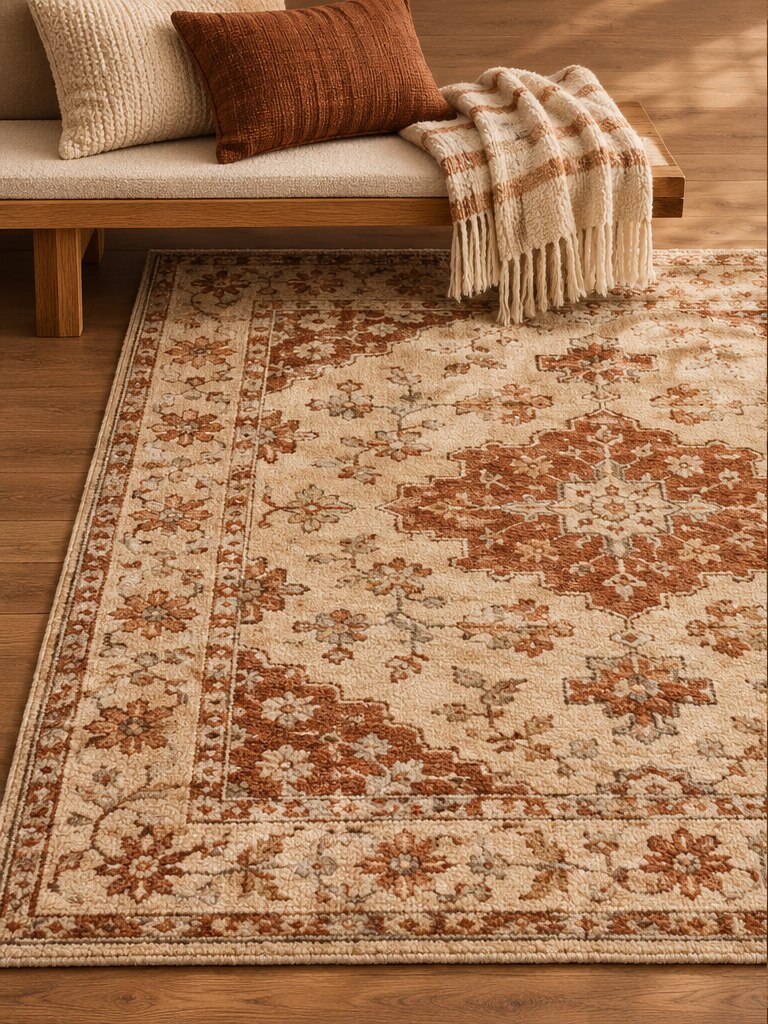
A rug can make furniture feel connected, soften a hard floor and help define a zone in an open room. The common mistake is choosing a size from a product photo before checking how the rug will sit under your furniture.

Begin with the furniture, not the rug
Measure the seating group, dining table or bed, then decide which pieces should relate to the rug. In a living room, the front legs of the main seats can sit on the rug, or the whole seating group can sit on it. Either can work. The important thing is that the rug is wide enough to visually connect the arrangement.
Use tape to mark the outline on the floor. Walk around it, open nearby doors and check how it meets the room’s main route. If the rug stops just short of every furniture leg, the group may look disconnected; if it blocks the door or narrows a walkway, it is too large for that position.
Living room: connect the seating
For a compact arrangement, start by bringing the front legs of the sofa and chairs onto the rug. For a larger room, test a larger outline that holds all the main seating. Keep the coffee table centred within the group and check that each seat has enough rug beneath it to feel intentional.
Dining room: allow chairs to move
The rug should still support a chair when someone pulls it back to sit down. Mark the table footprint, then extend the taped outline beyond the table by the distance your chairs travel in daily use. Pull a chair out from every side and check that its back legs do not catch on the rug edge.
For a 160 × 90 cm table, compare two outlines rather than assuming one standard size will suit: a 240 × 170 cm rug leaves a smaller border beyond the table; a 280 × 210 cm option gives chairs more room. Tape both, then test the actual chairs and nearby paths.
Bedroom: give the bed a grounded frame
A rug can sit under the lower two-thirds of a bed, under the front legs of the bed and bedside tables, or as runners beside the bed. Test the outline against the room width and door swing. If you use bedside tables every day, check whether their legs sit securely on the chosen surface.
Let the weave suit the room
A flat, low-profile weave is easier to use beneath dining chairs and near doors with limited clearance. A deeper pile can feel softer in a bedroom or lounge, but it needs enough space below doors and may require more care. Check the care instructions, fibre content and whether the rug is reversible before you buy.
A rug pad helps the rug stay in place and can protect some floor types, but the wrong pad may react with a finish. Confirm that the pad is suitable for your floor, and include its thickness when checking door clearance.
The three-minute sizing test
- Mark two possible sizes with removable tape.
- Pull out chairs, walk the main route and open every door.
- Check how much of the sofa, chair or bed will actually sit on the rug.
- Include fringe, rug-pad thickness and any nearby floor vent in the final measurement.
The best rug size makes the furniture arrangement feel deliberate while keeping movement easy. If the layout is still changing, settle the main pieces first with the living room planning guide, then tape the rug around them.