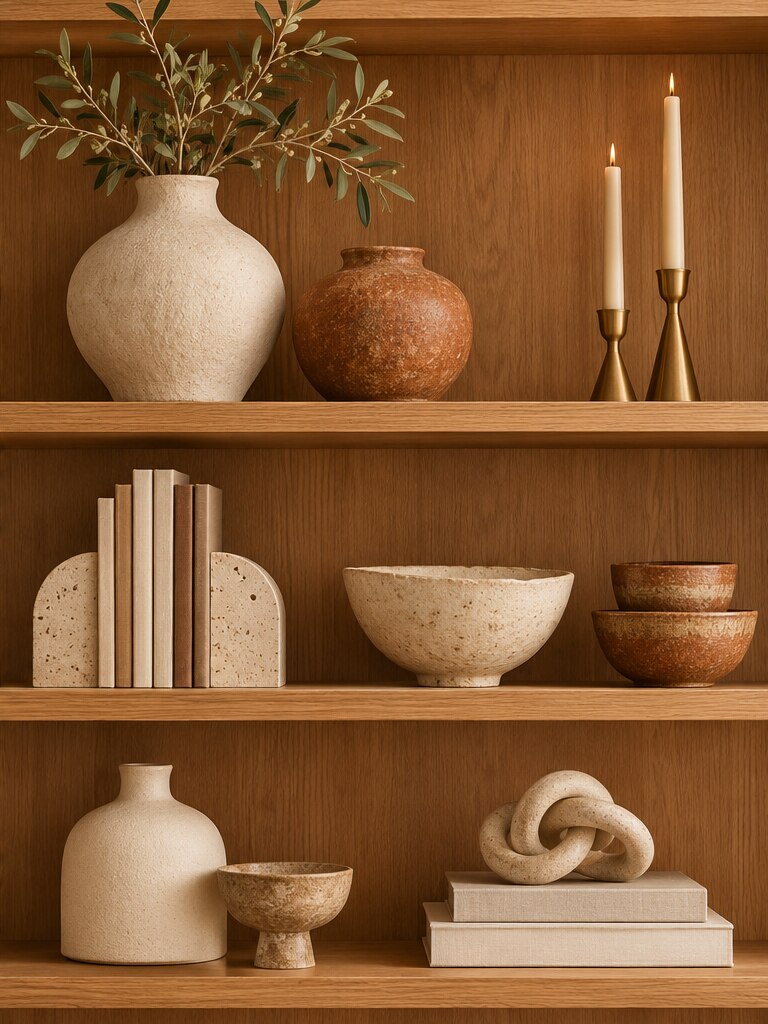
A good shelf is both useful and personal. It holds the things you reach for, but it also gives a room a place to show books, ceramics and objects that matter. The result feels more considered when you plan what the shelf must do before arranging what it will display.

Start with the objects you own
Measure the tallest book, the widest basket and the deepest object you expect to store. Then compare those dimensions with the usable opening inside the shelf. A unit listed at 30 cm deep may have less usable depth once you account for the back panel, trim or wall skirting.
Sort the objects into three groups: everyday items, display pieces and items that can be stored elsewhere. Keep everyday pieces within easy reach and place heavier items lower. This gives the shelf a clear hierarchy before you begin styling.
Build a quiet structure
Start with the larger anchors: a stack of books, a basket or a substantial ceramic piece. Distribute them across the shelves rather than placing all the visual weight at one end. Then add smaller objects to create rhythm. A taller object can balance a wider, lower object nearby.
Think in small groupings rather than filling every opening. Two or three pieces with a shared material, tone or subject can read as one thoughtful collection. Leave visible space around the group so each object has a clear silhouette.
Vary height and texture
Mix horizontal and upright books, matte and reflective surfaces, and a few different heights. A linen-covered book beside a ceramic bowl feels different from a row of objects in the same finish. Repeating one colour or material across several shelves helps the arrangement feel connected without making every shelf identical.
Leave useful negative space
Open space is part of the composition. It gives the eye a rest and leaves room for the collection to change. If the shelf feels crowded, remove a few pieces before adding more. Often the simplest improvement is to create one empty area or reduce a group to its most meaningful objects.
Make the display safe and practical
Check the manufacturer’s load rating for each shelf and the anchoring instructions for the full unit. Tall furniture should be secured as directed, especially in homes with children or pets. Keep breakable or heavy pieces away from the front edge and avoid placing objects where they block a door, switch or outlet.
Before changing the arrangement, photograph the shelf as it is. Move one group at a time, then view it from the doorway and from the main seat. That wider view helps reveal whether the display is balanced with the room, not just with itself.
A simple styling sequence
- Place the books and objects you use most in easy-to-reach positions.
- Set two or three larger anchors across the shelves.
- Add a few smaller pieces that repeat a material or colour.
- Step back, remove one item from any crowded shelf, then check the room view.
A shelf feels complete when it supports daily life and still leaves the room some breathing space. For the larger furniture arrangement, see our layout guide; for a display that works after dark, use the layered lighting guide.